Introduction
Home workouts are becoming popular because they can fit into busy schedules without requiring a gym membership or expensive equipment. One exercise attracting attention is the Japanese heel raise, also called a ballerina raise.
A recent The Indian Express fitness report discusses the movement, its potential benefits and precautions highlighted by an orthopaedic expert.
Although the exercise looks simple, performing it with control and maintaining good balance are important.
What Are Japanese Heel Raises?
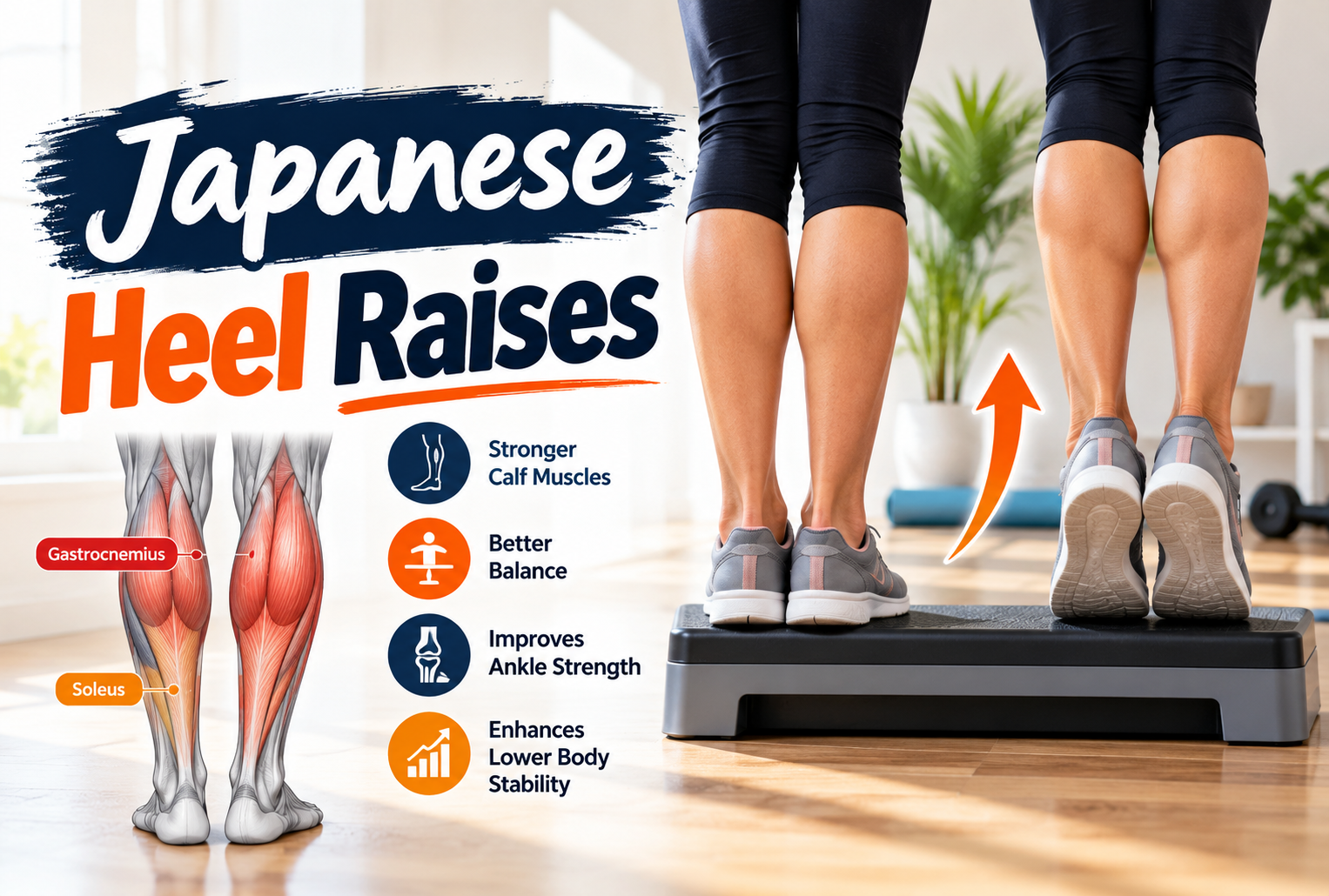
Japanese heel raises involve standing upright and lifting your heels so that your body rises onto the balls of your feet. You then lower your heels back towards the floor in a controlled movement.
The exercise mainly works the calf muscles, which help move the ankle and contribute to activities such as walking, climbing stairs and running.
The name used online should not be taken to mean that the movement is entirely different from every traditional calf raise. The precise technique and range of motion matter more than the label.
Potential Benefits of Heel Raises
1. Strengthening the Calf Muscles
Heel raises provide a simple way to train the muscles at the back of the lower legs. Regular, appropriately progressed exercises may help improve strength and muscular endurance.
2. Supporting Everyday Movement
The calf muscles are involved in pushing the body forward during walking and helping you rise onto your toes. Strengthening them may support these everyday movements.
3. Practising Controlled Balance
Standing heel raises require you to maintain an upright position while moving. Holding a stable surface for support can make the exercise more manageable for beginners.
However, heel raises alone do not guarantee improved balance or prevent falls. Overall strength, coordination and other factors also matter.
4. Exercising Without Gym Equipment
One advantage is convenience. You can perform heel raises at home, provided you have a stable surface and enough room to move safely.
How to Perform Japanese Heel Raises Correctly
-
Stand upright: Keep your feet approximately hip-width apart and your posture comfortable.
-
Use support if needed: Stand near a wall or sturdy chair to reduce the risk of losing balance.
-
Lift your heels: Slowly rise onto the balls of your feet without leaning forward excessively.
-
Pause briefly: Maintain a controlled position rather than bouncing.
-
Lower slowly: Return your heels towards the floor with control.
-
Repeat comfortably: Start with a small number of repetitions and increase gradually if the movement feels comfortable.
Do not rush through the exercise or force your heels higher than your mobility allows.
Common Mistakes to Avoid
-
Moving too quickly: Fast repetitions can reduce control.
-
Using unstable support: Avoid furniture that may slide or tip.
-
Ignoring discomfort: Stop if you experience sharp pain, unusual swelling or significant discomfort.
-
Overdoing repetitions: Start conservatively instead of immediately following high-repetition social media routines.
Who Should Be Careful?
People with recent ankle or foot injuries, persistent heel pain, significant balance difficulties or medical conditions affecting sensation or circulation should seek appropriate professional advice before trying a new exercise.
If you have been advised to restrict weight-bearing activity, follow your healthcare professional's instructions.
For general physical activity guidance, the World Health Organization provides recommendations for adults and other age groups.
Can Heel Raises Replace a Complete Workout?
No. Heel raises can be a useful addition to a fitness routine, but they primarily target the lower legs. A balanced programme may also include exercises for the upper body, hips, core, cardiovascular fitness and flexibility, depending on individual needs.
The right combination will depend on your fitness level, goals and health circumstances.
Conclusion
Japanese heel raises are a convenient way to practise calf strengthening at home. Their simplicity makes them accessible to many people, but proper technique, gradual progression and suitable support are important.
Focus on controlled movement rather than chasing a high repetition count. If you have an injury or ongoing pain, seek professional guidance before adding the exercise to your routine.