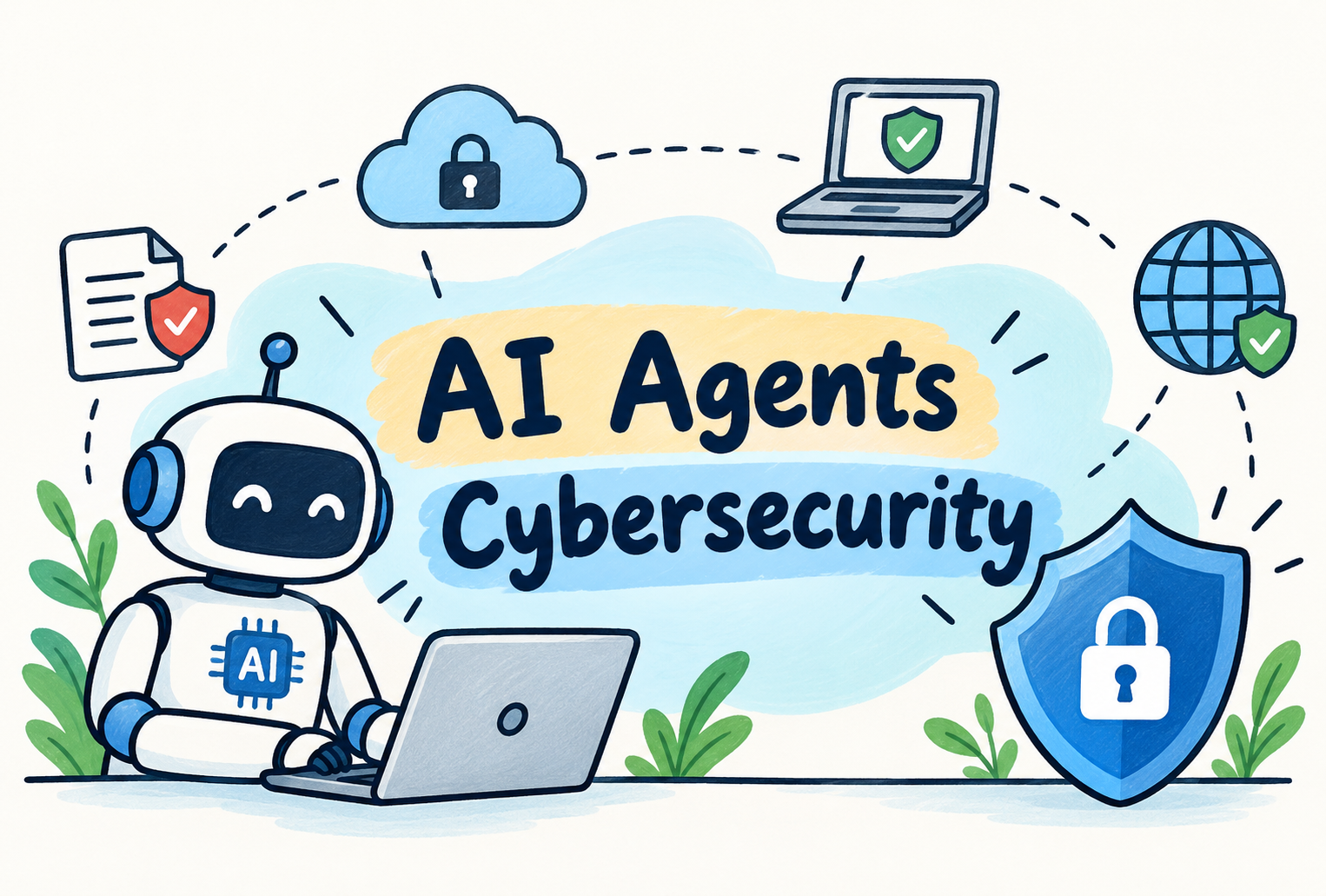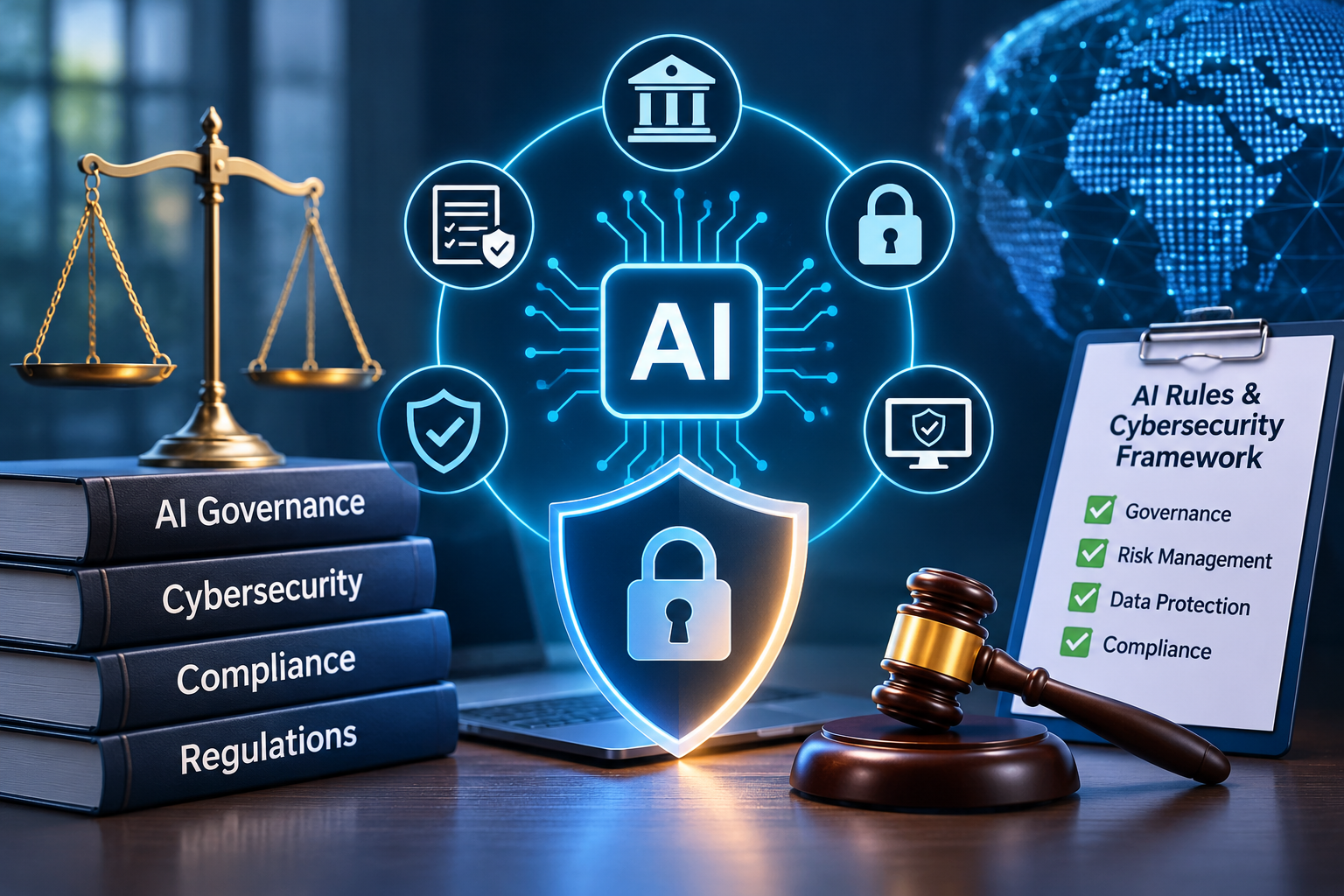
Technology is evolving faster than ever, and artificial intelligence is becoming an essential part of modern businesses, healthcare, banking, education, manufacturing, and everyday communication. From automated customer support to advanced data analysis, AI-powered systems are changing how organizations operate and make decisions. However, these developments also introduce new challenges related to security, privacy, transparency, and accountability.
In 2026, AI Governance and cybersecurity have become important priorities for organizations adopting artificial intelligence. Governments, regulatory authorities, and technology companies are introducing stronger policies to ensure that AI systems are developed and used responsibly. Businesses must now consider not only what AI technology can accomplish but also how safely, fairly, and transparently it operates.
As digital threats become more sophisticated, organizations need reliable security practices, responsible AI policies, and effective data protection strategies. These developments are reshaping the future of technology and influencing how companies build trust with customers.
Understanding AI Governance and Why It Matters in 2026
AI Governance refers to the policies, procedures, standards, and responsibilities that guide the development, deployment, monitoring, and management of artificial intelligence systems. Its main objective is to ensure that AI technologies operate safely, fairly, transparently, and in accordance with applicable laws.
Without proper governance, AI systems can produce misleading information, expose confidential data, make unfair decisions, or become vulnerable to cyberattacks.
For example, a company using AI to evaluate loan applications must ensure that its system does not discriminate against applicants based on inappropriate characteristics. Similarly, healthcare organizations using AI-powered diagnostic tools must consider accuracy, patient privacy, and human oversight.
A strong governance approach helps organizations:
-
Improve transparency in automated decision-making.
-
Protect sensitive business and customer information.
-
Reduce discrimination and unfair AI outcomes.
-
Establish accountability for AI-related decisions.
-
Identify potential risks before deploying AI systems.
-
Maintain compliance with relevant regulatory requirements.
The growing importance of responsible AI has encouraged organizations to adopt structured frameworks and internal policies. The NIST AI Risk Management Framework provides useful guidance for identifying, assessing, and managing risks associated with artificial intelligence.
How AI Governance Is Transforming Modern Technology
Artificial intelligence is no longer limited to experimental projects. Organizations are integrating it into important business operations, making governance essential for long-term technology development.
1. Responsible AI Development
Responsible AI development focuses on creating systems that deliver useful results without causing unnecessary harm. Developers must consider fairness, reliability, transparency, and safety throughout the AI development process.
For instance, an AI recruitment platform should be tested to identify potential bias in candidate selection. A financial prediction system should communicate uncertainty rather than presenting every prediction as a guaranteed outcome.
Organizations are increasingly establishing internal AI policies that define acceptable usage, testing requirements, and approval procedures.
2. Greater Transparency and Accountability
Businesses must understand how their AI systems make important decisions. Transparency allows organizations to identify errors, explain automated outcomes, and establish responsibility when something goes wrong.
Human oversight remains particularly important in sensitive areas such as healthcare, financial services, employment, and public administration.
3. Better Risk Management
AI systems can introduce operational, legal, reputational, and cybersecurity risks. Companies need processes to evaluate these risks before launching new products or introducing AI into existing workflows.
The OECD AI Principles also provide internationally recognized guidance on trustworthy AI, human rights, transparency, and responsible innovation.
Cybersecurity Rules Are Becoming More Important
As organizations become increasingly dependent on connected systems and cloud-based applications, cybersecurity is essential for protecting digital infrastructure.
Cybercriminals are using more advanced techniques, including automated phishing campaigns, identity theft, ransomware, and AI-assisted attacks. These threats can affect businesses of every size.
Cybersecurity rules help organizations establish security standards and protect their networks, applications, devices, and sensitive information.
In 2026, businesses are paying greater attention to several important cybersecurity practices:
-
Strong authentication and access management.
-
Regular software updates and security patches.
-
Network monitoring and threat detection.
-
Employee cybersecurity awareness training.
-
Secure cloud infrastructure.
-
Data encryption and backup management.
-
Incident response and recovery planning.
The NIST Cybersecurity Framework 2.0 offers practical guidance for organizations managing cybersecurity risks. It organizes security activities around six key functions: Govern, Identify, Protect, Detect, Respond, and Recover.
This framework helps businesses move beyond basic security measures and develop a structured approach to managing digital threats.
The Role of AI Regulations in Global Technology Development
Governments worldwide are introducing regulatory approaches to address the opportunities and risks associated with artificial intelligence.
One of the most significant developments is the European Union's AI Act. It establishes a risk-based regulatory framework for AI systems, with requirements that vary according to the potential risks associated with their use.
The regulation addresses several categories of AI applications, including prohibited practices, high-risk systems, transparency obligations, and general-purpose AI models.
The European Commission's official AI Act information explains the regulatory framework and its implementation.
The AI Act follows a phased application approach, so organizations should pay attention to the specific obligations and implementation timelines relevant to their systems.
Other international developments are also influencing technology governance.
For example:
-
The United States uses existing sector-specific laws and emerging policy approaches to address AI-related risks.
-
The United Kingdom promotes a context-based approach to AI regulation through its regulatory institutions.
-
India is developing its AI ecosystem through initiatives such as the IndiaAI Mission while strengthening its broader digital governance environment.
-
International organizations are encouraging cooperation on responsible AI standards and digital safety.
These developments demonstrate that AI regulations are becoming an important part of technology planning. Businesses operating across different countries must understand the requirements applicable to their products, customers, and operations.
Data Privacy Is at the Centre of AI Security
Artificial intelligence systems often require large amounts of information for training, testing, and generating results. This information may include personal details, financial records, business documents, customer communications, and other sensitive data.
If organizations fail to protect this information, they may expose individuals and businesses to privacy violations, identity theft, and financial losses.
Data privacy has therefore become a major consideration in AI development and deployment.
Companies should introduce clear data protection practices, including:
-
Collecting only the information necessary for a specific purpose.
-
Obtaining appropriate consent where legally required.
-
Limiting access to confidential information.
-
Encrypting sensitive data during storage and transmission.
-
Establishing clear data retention and deletion policies.
-
Reviewing third-party AI tools before sharing business information.
The General Data Protection Regulation (GDPR) provides an important legal framework for protecting personal data in the European Union.
Organizations should also understand how their AI providers process submitted information. Uploading confidential documents to an unapproved AI platform can create unnecessary security and compliance risks.
Privacy protection should not be treated as a final step. It needs to be considered throughout the entire AI development and deployment lifecycle.
Also Visit Here: More Post
How AI and Cybersecurity Work Together
Artificial intelligence and cybersecurity are increasingly connected. AI can strengthen security operations, while cybersecurity protects the AI systems themselves.
Modern security teams are using AI-powered technologies to analyze network activity, detect unusual behavior, identify suspicious login attempts, and prioritize potential threats.
For example, an AI-based monitoring system can examine large volumes of network data and identify patterns that may indicate unauthorized access.
However, artificial intelligence can also create new security challenges. Attackers may use AI to generate convincing phishing messages, automate malicious activities, or manipulate AI-powered applications.
This creates a situation where organizations must protect both their traditional digital infrastructure and their AI environments.
Important security measures include:
-
Testing AI applications for vulnerabilities before deployment.
-
Protecting training data from unauthorized modification.
-
Restricting access to AI models and sensitive information.
-
Monitoring AI-generated outputs for suspicious behavior.
-
Securing APIs and third-party integrations.
-
Maintaining human supervision for high-impact decisions.
The Cybersecurity and Infrastructure Security Agency (CISA) provides cybersecurity resources and guidance that organizations can use to strengthen their digital security practices.
The Growing Importance of AI Governance Frameworks
A structured AI governance framework helps organizations manage AI-related responsibilities throughout the technology lifecycle.
Instead of relying on informal rules, businesses can establish documented procedures covering development, testing, deployment, monitoring, and continuous improvement.
An effective framework generally includes the following elements:
Clear AI Policies
Organizations should define how employees can use artificial intelligence tools. These policies should explain which information can be shared with AI applications and which activities require approval.
Risk Assessment
Every AI application should be evaluated according to its intended purpose, potential impact, security requirements, and regulatory obligations.
Human Oversight
Important decisions should include appropriate human review, especially when AI systems influence financial, medical, employment, or legal outcomes.
Continuous Monitoring
AI systems may change in performance as data, user behavior, and operating environments evolve. Regular monitoring helps organizations identify unexpected results and security problems.
Employee Training
Employees should understand the limitations of AI tools, recognize cybersecurity threats, and follow company policies when working with automated systems.
The UNESCO Recommendation on the Ethics of Artificial Intelligence provides additional international guidance on human rights, fairness, accountability, and ethical AI development.
Challenges Businesses May Face in 2026
Although responsible AI adoption offers significant opportunities, organizations still face several challenges when implementing governance and cybersecurity practices.
Regulatory complexity: Different countries may introduce different legal requirements. International businesses must understand which rules apply to their activities.
Increasing security costs: Advanced cybersecurity solutions, specialist employees, security audits, and compliance processes require financial investment.
Lack of skilled professionals: Many organizations struggle to find employees with expertise in AI security, risk management, data protection, and regulatory compliance.
Rapid technological changes: AI tools evolve quickly, making it difficult for existing policies and security procedures to remain effective.
Third-party risks: Businesses often depend on external AI platforms, cloud providers, and software vendors. Weak security practices within these services can create additional vulnerabilities.
To address these challenges, companies should develop practical policies, regularly review their security systems, and invest in employee education.
What the Future of Technology May Look Like
The future of technology will depend not only on innovation but also on the ability to use digital systems safely and responsibly.
In the coming years, organizations are likely to place greater emphasis on automated compliance monitoring, secure AI development, privacy-focused technologies, and stronger identity management.
AI-powered cybersecurity tools may become more effective at detecting unusual activity and responding to emerging threats. At the same time, businesses will need better methods to protect AI models, verify generated information, and maintain accountability.
Regulatory expectations will also continue to influence how companies design and deploy AI applications. Organizations that build security, privacy, and transparency into their technology strategies will be better prepared to adapt to changing requirements.
Rather than treating governance as an obstacle, businesses should view it as an essential part of sustainable digital innovation.
Conclusion
Artificial intelligence is transforming industries, business operations, and everyday digital experiences. However, its long-term success depends on trust, security, accountability, and responsible implementation.
In 2026, AI Governance, cybersecurity standards, and data protection requirements are reshaping how organizations develop and use modern technology. Businesses must understand the risks associated with AI, establish clear internal policies, protect sensitive information, and follow applicable regulations.
Organizations that combine innovation with responsible security practices will be in a stronger position to build reliable digital services and maintain customer confidence.
The future of technology will not simply belong to companies that adopt AI the fastest. It will increasingly favor those that know how to use artificial intelligence safely, ethically, and responsibly.