What Are AI Voice Cloning Scams?
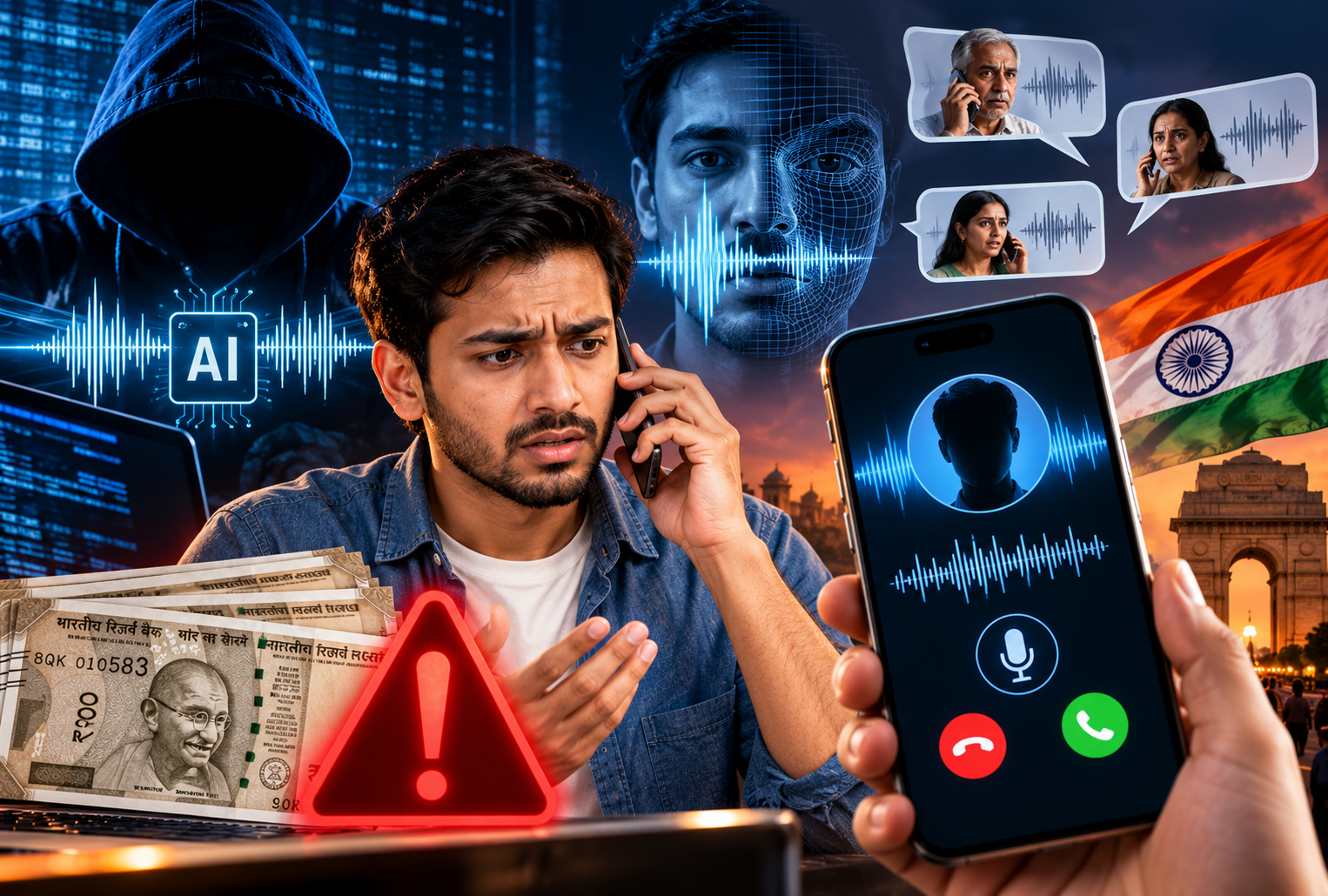
Artificial intelligence is making digital services more useful, but the same technology can also be misused by criminals. One emerging concern is AI voice cloning, in which software generates a voice that resembles a real person.
Fraudsters may use this technology to imitate a family member, friend, colleague or another trusted individual. They can then contact a target with an urgent request for money or sensitive information.
A recent Mint report on SBI’s warning about AI voice-cloning scams explains how criminals may exploit familiar voices to pressure people into transferring money or revealing banking details.
The main danger is not simply that a voice sounds realistic. It is that the caller may create panic and persuade the recipient to act before checking whether the request is genuine.
How Does Voice Cloning Work?
Voice-cloning systems can analyse audio samples and generate new speech that resembles the original speaker. Depending on the system and the quality of the available audio, the generated voice may imitate characteristics such as tone, accent and speaking rhythm.
Audio shared publicly on social media, in videos or through other online platforms may sometimes be misused. However, hearing a person’s voice online does not automatically mean that criminals can create a perfect imitation. The quality of generated audio varies, and unusual pauses or unnatural phrasing may still reveal a problem.
The safest approach is to avoid relying on voice recognition alone when a caller asks for money, passwords, one-time passwords or other confidential information.
Common Types of AI Voice Scams
1. Fake Emergency Calls From Family Members
A caller may claim to be a son, daughter, sibling or another relative who urgently needs money. The story might involve an accident, a medical emergency, trouble with the police or a lost phone.
The caller may insist that the recipient must act immediately and must not tell anyone else. This pressure is intended to prevent independent verification.
What to do: End the call and contact the family member through a number you already know. If necessary, contact another trusted relative to verify the situation.
2. Impersonation of a Boss or Colleague
Employees may receive calls or voice messages that appear to come from a manager asking them to make an urgent payment, share confidential information or bypass normal approval procedures.
This type of scam can target small businesses as well as large organisations.
What to do: Verify unusual payment instructions through a separate communication channel. Businesses should require documented approval for transfers, especially when banking details or payment recipients change.
3. Fake Bank or Government Calls
Criminals may pretend to represent a bank, government department or service provider. They might claim that an account will be blocked unless the recipient shares information or completes an immediate transaction.
A convincing voice does not establish that the caller is genuine. Legitimate organisations should not need a customer to disclose their UPI PIN or OTP over a phone call.
What to do: Disconnect and contact the organisation using its official website, app or a verified customer-service number.
Warning Signs You Should Never Ignore
Some scams are designed to sound convincing, so there may not always be an obvious audio clue. Instead, pay attention to the caller’s behaviour and the request being made.
-
Extreme urgency: You are told to send money immediately.
-
Secrecy: The caller insists that you must not contact anyone else.
-
Unusual payment requests: You are asked to transfer funds to a new account or personal UPI ID.
-
Requests for confidential information: The caller asks for an OTP, UPI PIN, password or banking credentials.
-
Refusal to verify identity: The person becomes angry when you ask a security question or suggest calling back.
A single warning sign does not prove that a call is fraudulent, but several together should prompt caution.
Practical Ways to Protect Yourself
Use a Verification Phrase With Family
Families can agree on a private phrase that is not publicly shared. If someone calls with an emergency request, ask them to provide the phrase.
Do not rely on this method alone, because private information can be disclosed or guessed. It should be combined with an independent callback or another verification method.
Call Back Using a Known Number
Do not simply redial the number shown in a suspicious message. Instead, use a saved contact or another number that you know belongs to the person.
If the person cannot be reached, contact someone else who can independently confirm the situation.
Never Share Banking Credentials
Do not share your OTP, UPI PIN, password or card security details because someone claims to be a relative, bank employee or official. Do not install remote-access applications or follow payment instructions from an unverified caller.
Create Payment Checks at Work
Small businesses should establish a clear process for approving payments. A voice message alone should not be enough to authorise a large transfer. Use a second approver, verified written instructions and a callback to a known number.
Limit Unnecessary Public Audio Sharing
Think carefully before publishing personal information or recordings that could be misused. You do not need to stop using social media, but reducing the amount of publicly available personal information can help limit opportunities for impersonation.
What Should You Do If You Have Already Sent Money?
If you believe you have been tricked into transferring money, contact your bank or payment provider immediately and ask about steps to secure the account and report the transaction.
In India, you can call the national cybercrime helpline 1930 to report financial cyber fraud. You can also submit a complaint through the official National Cyber Crime Reporting Portal.
Keep transaction references, screenshots, phone numbers, messages and other relevant evidence. Report the incident promptly; quick action may help authorities and financial institutions respond, although recovery is not guaranteed.
Do not pay anyone who promises guaranteed recovery of stolen money in exchange for an advance fee. Such offers can lead to further losses.
Conclusion
AI voice cloning scams exploit trust, fear and urgency. The most effective protection is to verify unusual requests independently before transferring money or sharing sensitive information. Families should agree on ways to confirm emergencies, while businesses should use clear payment-approval procedures.
Technology may make fake voices more convincing, but a familiar voice should never replace basic security checks. When in doubt, stop, verify and report suspicious activity.