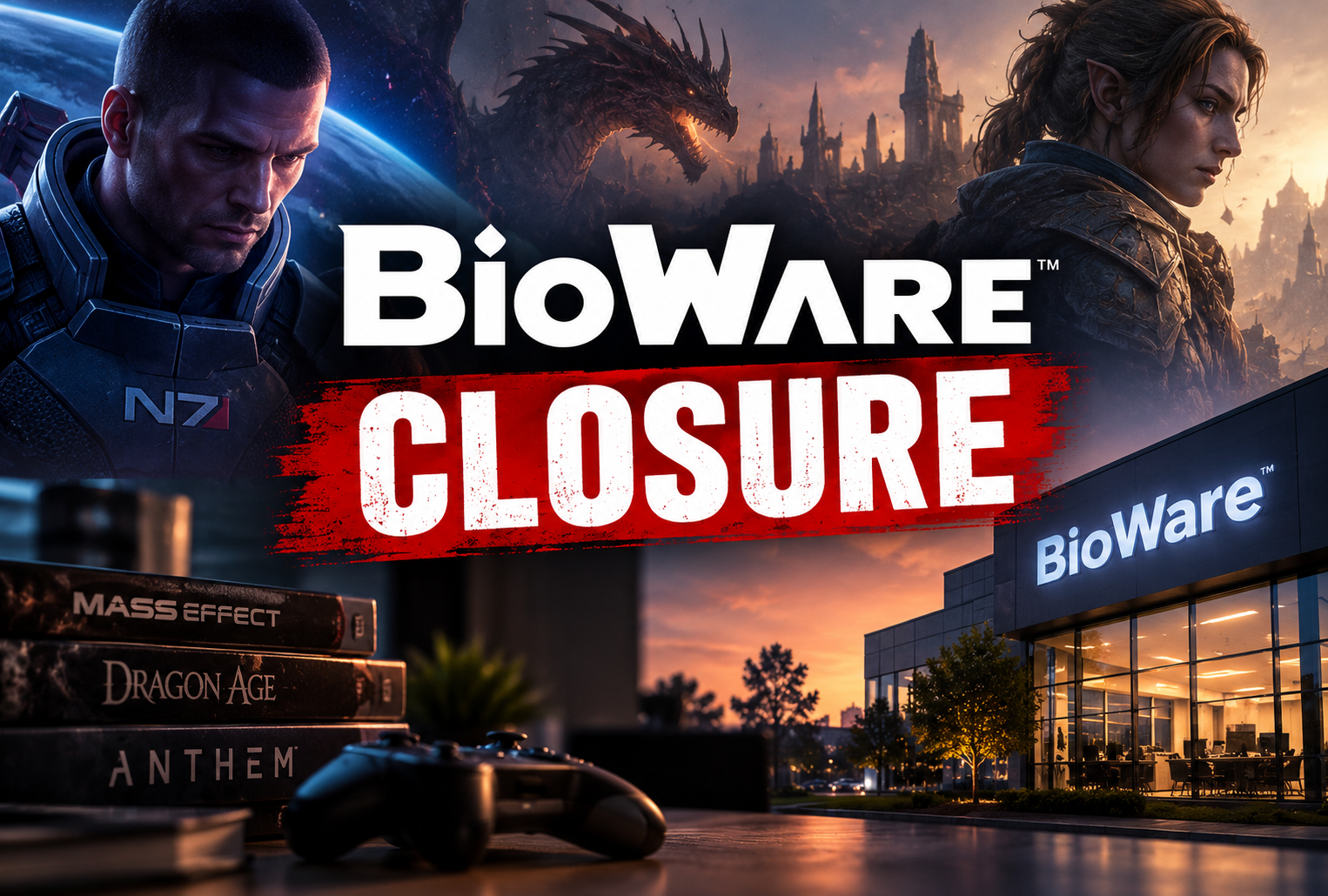
BioWare has been one of the most recognisable names in role-playing games for more than three decades. Its titles, including Mass Effect, Dragon Age, and Star Wars: Knights of the Old Republic, have attracted players through character-driven storytelling, memorable companions, and decisions that influence the experience.
The studio's future became a major gaming-industry story in October 2026. In an announcement dated October 21, BioWare said it was closing and that early development on the next Mass Effect project was ending.
The news raises significant questions for fans, developers, and the wider gaming industry.
Original source: Official BioWare update — October 21, 2026
Why Is BioWare's Closure Significant?
BioWare helped establish the popularity of narrative-driven role-playing games. Its projects encouraged players to develop relationships with fictional characters, make consequential decisions, and explore detailed fictional worlds.
The studio's legacy includes several influential releases:
-
Mass Effect: A science-fiction role-playing series built around exploration, relationships, and decisions with far-reaching consequences.
-
Dragon Age: A fantasy franchise known for its characters, political conflicts, and branching narratives.
-
Star Wars: Knights of the Old Republic: A role-playing game set in the Star Wars universe.
-
Baldur's Gate: An important part of the studio's earlier history.
For many fans, the closure represents more than the end of a development studio. It raises concerns about the future of the storytelling style that made these games distinctive.
What Happens to the Next Mass Effect Game?
One of the most significant points in BioWare's announcement is that early development on the next Mass Effect project is ending.
This creates uncertainty for fans who were hoping to see the franchise continue with another major release.
At the same time, the announcement should not be interpreted as proof that every future Mass Effect project across the industry has permanently been cancelled. The precise status of any remaining rights, plans, or related projects would need to be established through further official announcements.
Players should be cautious about unverified claims regarding release dates, replacement developers, or future game announcements.
What About Dragon Age?
Dragon Age remains another major part of BioWare's legacy. The franchise attracted players through its fantasy setting, complex characters, companion relationships, and difficult moral decisions.
The studio's closure raises questions about who might manage the franchise in the future and whether additional games could be developed.
However, the end of a particular studio does not automatically establish the fate of a franchise's intellectual property. Any confirmed plans for new Dragon Age titles would need to come from the relevant rights holder or an authorised developer.
Until further information becomes available, fans should distinguish between confirmed developments and speculation.
What Does This Mean for BioWare Developers?
Studio closures can have serious consequences for employees, particularly developers who have spent years working on long-running franchises.
Game development involves specialised teams working across writing, programming, animation, sound design, quality assurance, and production. When a studio closes, experienced developers may need to find opportunities elsewhere in an already competitive industry.
The announcement also highlights a wider challenge facing game developers: even established studios with well-known franchises can be affected by changing business priorities and financial pressures.
For players, the human impact behind a studio closure is an important part of understanding the news.
What Does This Reveal About the Gaming Industry?
The gaming industry has experienced significant changes in development budgets, player expectations, publishing strategies, and the cost of producing large-scale games.
Major publishers must decide which projects to fund, how to allocate development resources, and how to balance established franchises against new intellectual properties.
These decisions can affect even studios with a long history of successful releases.
For gaming companies, the challenge is to maintain creative quality while managing costs and delivering products that meet audience expectations. For players, studio closures can mean uncertainty about favourite series and the teams responsible for creating them.
Will Mass Effect and Dragon Age Return in the Future?
Their long histories and established audiences mean both franchises remain important names in gaming. However, their future direction cannot be determined solely from their past popularity.
Any continuation would depend on decisions by the relevant rights holders, future development arrangements, commercial priorities, and the availability of suitable teams.
Fans should follow official company statements and announcements for reliable updates rather than relying on rumours or speculative release dates.
Conclusion
BioWare's announced closure marks a significant moment for the role-playing game community. Its legacy includes influential worlds, memorable characters, and stories shaped by player choices.
The announcement also leaves important questions about the next Mass Effect project, Dragon Age, and the developers who helped build these franchises.
For now, the most responsible approach is to separate the studio's confirmed announcement from assumptions about the future of its games. Any further developments will depend on official decisions and announcements from the relevant companies.