Competitive gaming has grown beyond professional teams and major international championships. Today, players can compete in online gaming competitions, participate in community events, and test their skills against opponents from different regions. However, finding tournaments, understanding registration requirements, forming teams, and coordinating match schedules can still be challenging for beginners.
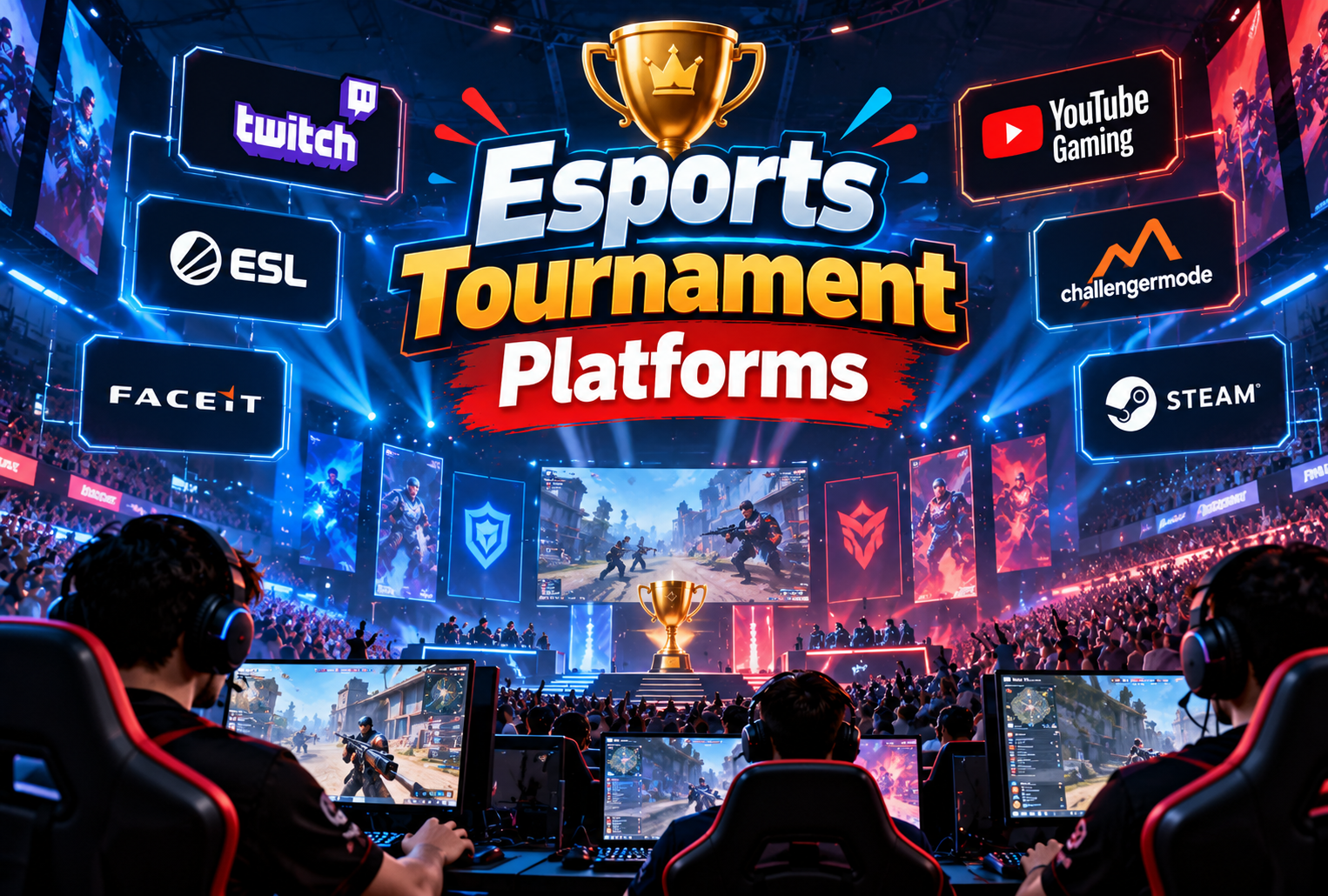
This is where Esports Tournament Platforms are making a difference. These platforms help players discover competitions, register for matches, connect with teammates, track results, and understand tournament rules through a more organised process.
As competitive gaming continues to evolve, accessible tournament systems are helping amateur players take their first steps into esports. From mobile gaming competitions to PC and console championships, new digital tools are creating more structured ways for players to participate.
In this guide, we explore how gaming tournament platforms work, why they matter for beginners, and how players can use them to develop their competitive gaming skills.
1. What Are Esports Tournament Platforms?
Esports Tournament Platforms are digital services that help organise, manage, and participate in competitive gaming events. Depending on the platform, users may be able to discover upcoming tournaments, register individually or as a team, receive match information, report results, and follow leaderboards.
Traditionally, players often relied on gaming communities, social media groups, or personal contacts to find competitions. Tournament platforms can bring many of these activities together in one place.
Common features include:
-
Tournament listings and event discovery.
-
Player and team registration.
-
Match schedules and tournament brackets.
-
Leaderboards and result tracking.
-
Team recruitment and community features.
-
Tournament rules and announcements.
-
Organiser tools for managing competitions.
Features differ between platforms, games, and tournament organisers. Some services focus on casual community events, while others support more formal competitive leagues.
For players, the main advantage is convenience: instead of searching across multiple channels, they may be able to find and manage more of their competitive gaming activities through a single service.
2. Finding Online Esports Tournaments Becomes Easier
One of the biggest barriers for new players is simply discovering competitions that match their interests and skill levels.
Gaming tournament platforms can organise events by game, region, format, eligibility, and competition type. This makes it easier to find opportunities without relying entirely on personal invitations.
For example, a player interested in mobile battle royale games might look for amateur competitions, while a football gaming enthusiast could search for one-on-one tournaments.
Some platforms also provide event calendars, registration deadlines, and notifications about upcoming matches.
This can help players answer important questions before signing up:
-
Which game is being played?
-
Is the tournament open to beginners?
-
Can individuals register, or is a complete team required?
-
Are there entry fees or age restrictions?
-
When will matches take place?
-
What rules determine the winner?
Having this information available before registration makes the process more predictable and reduces confusion for first-time participants.
3. Easier Registration Helps Beginners Get Started
Tournament registration can feel complicated when players must contact organisers, submit details manually, and follow multiple communication channels.
Modern gaming tournament platforms can simplify this process through online registration forms, player profiles, team invitations, and centralised event information.
Depending on the competition, players may need to provide their gaming ID, account details, region, age confirmation, or team information.
A typical registration process may involve the following steps:
-
Create an account on a suitable tournament platform.
-
Select a game and find an eligible competition.
-
Read the tournament rules and requirements.
-
Register individually or join a team.
-
Confirm the registration and check the match schedule.
-
Follow organiser announcements before the competition begins.
Not every event uses the same process. Official competitions may require additional verification, account eligibility checks, or qualification rounds.
Beginner tip: Read the complete tournament rules before registering. Check whether participation is free, whether a deposit is required, and how cancellations or disqualifications are handled.
4. Gaming Platforms Help Players Find Teammates
Team-based esports games require more than individual skill. Players must communicate effectively, coordinate strategies, and understand their teammates' roles.
However, beginners may not already have a group of friends who play the same game at a competitive level.
Some esports platforms and gaming communities help users connect with other players through team recruitment, community discussions, player profiles, and group invitations.
These features can help players find teammates who share similar interests, schedules, and competitive goals.
For example, a player who wants to enter a team-based shooter tournament might look for teammates with complementary roles. A mobile esports player could join a community to practise with others before registering for a competition.
When choosing teammates, consider communication, reliability, availability, and attitude—not just rankings.
A coordinated team that practises consistently may perform better than a group of individually skilled players who struggle to work together.
5. Amateur Esports Tournaments Create More Entry Points
Professional esports competitions often involve experienced players, established teams, qualification requirements, and high levels of competition. For beginners, entering this environment immediately may feel intimidating.
Amateur esports tournaments offer a more accessible starting point when they provide suitable formats, clear rules, and reasonable eligibility requirements.
These competitions may include:
-
Casual community tournaments.
-
College and university gaming events.
-
Local gaming café competitions.
-
Online weekend tournaments.
-
Beginner-friendly leagues.
-
Regional qualifiers for larger events.
Amateur events give players an opportunity to experience competitive formats, practise under pressure, and learn how organised matches work.
Some competitions are open to everyone who meets the eligibility rules, while others require a ranking, qualification result, or invitation.
Players should not assume that every amateur event is beginner-friendly. Checking the skill level and format before joining can help them choose a suitable competition.
6. Online Gaming Competitions Make Participation More Flexible
Online competitions allow eligible players to participate remotely rather than travelling to a physical venue. This can make competitive gaming more accessible to people who live far from major gaming centres.
Players may be able to compete from home, provided they meet the event's technical and eligibility requirements.
Online tournaments can reduce travel expenses and make it easier to participate around work, education, and other commitments.
However, remote competitions still require preparation. Players need a stable internet connection, a compatible device, access to the required game, and an understanding of how matches are hosted.
Organisers may also specify rules for server regions, disconnections, match evidence, and dispute resolution.
For reliable participation, check your internet connection, update the game in advance, and join the event's official communication channel before the scheduled start time.
7. Tournament Management Tools Improve Organisation
Running a tournament involves much more than collecting registrations. Organisers must create brackets, schedule matches, communicate rule changes, verify results, and resolve disputes.
Tournament management tools can automate or simplify many of these tasks.
Automated Brackets and Match Scheduling
Platforms may generate tournament brackets based on the selected format, helping organisers manage single-elimination, double-elimination, or group-stage competitions.
Automated scheduling can also reduce confusion about match times and opponents.
Result Reporting
Some platforms let players submit results through a dedicated interface. Depending on the event, organisers may require screenshots, match IDs, or other evidence.
Centralised Announcements
Updates about delays, rule changes, and match instructions can be shared through a central event page or integrated notification system.
Leaderboards and Standings
Leaderboards allow participants to follow tournament progress and understand how results affect their position.
These tools can make competitions easier to manage, although organisers still need clear rules, fair decision-making, and appropriate oversight.
8. Real-World Example: India's Growing Tournament Ecosystem
India provides a useful example of how gaming platforms can support broader participation in esports.
The country has active gaming communities, mobile esports players, college competitions, gaming creators, and professional tournament organisers. Online qualifiers and community events can help players discover structured competitive opportunities.
In October 2026, news coverage reported that KRAFTON had introduced Battlin, a platform designed to make BGMI tournaments easier to discover, join, and host. Reported features included tournament discovery, registration, scheduling, results tracking, and reward distribution. The platform was also described as supporting organisers such as creators, colleges, gaming cafés, and other organisations.
Read the Times of India report on Battlin for more information.
This type of platform illustrates how tournament administration and player discovery can be brought together. Availability, supported games, eligibility, and individual event rules should always be checked through the relevant official service.
India's wider esports ecosystem also includes professional organisers such as NODWIN Gaming, which runs competitive gaming events and supports esports-related activities.
9. Fair Play and Anti-Cheat Measures Build Trust
Competitive gaming depends on fair competition. If players believe an event is manipulated or that cheating goes unpunished, they may lose confidence in the organiser.
Gaming tournament platforms can support fair play by publishing rules, communicating penalties, documenting results, and providing processes for reporting suspected violations.
Depending on the game and event, organisers may use official anti-cheat systems, account verification, match evidence, referee reviews, and eligibility checks.
Players should also understand the consequences of breaking rules related to cheating, account sharing, collusion, harassment, or prohibited software.
For example, official competitive events may publish detailed rulebooks that define player eligibility, match procedures, conduct, and dispute handling. The Fortnite Competitive Rules Library provides an example of how a game publisher documents rules for its competitive events.
A well-managed tournament should make the rules accessible before participation begins and apply them consistently.
10. Gaming Communities Help Players Learn and Improve
Esports development involves more than entering tournaments. Players need opportunities to practise, review mistakes, and learn from others.
Gaming communities can help participants share strategies, discuss updates, arrange practice matches, and receive feedback.
Depending on the community, players may find:
-
Training sessions and practice partners.
-
Game-specific discussions.
-
Team recruitment channels.
-
Coaching and strategy resources.
-
Tournament announcements.
-
Match reviews and performance feedback.
Beginners can benefit from observing experienced players, but advice should be evaluated carefully because community recommendations are not always accurate.
Players can also track their own performance by reviewing match results, identifying recurring mistakes, and setting measurable improvement goals.
Consistent practice, good communication, and a willingness to learn can help players become more competitive over time.
11. How to Join Esports Tournaments as a Beginner
If you want to start competitive gaming, you do not need to begin with a major championship. A practical approach is to build your skills and participate in smaller competitions first.
Step 1: Choose Your Main Game
Start with a game you enjoy and understand. Consider whether you prefer mobile, PC, or console gaming, and whether you want to compete individually or as part of a team.
Step 2: Understand the Competitive Format
Learn the basic rules, scoring system, maps, character roles, or game modes relevant to the competition.
Step 3: Find a Suitable Platform
Look for tournament services that support your game and region. Check the organiser's reputation, event rules, registration requirements, and support options.
Step 4: Practise Before Registering
Play regularly, learn from experienced competitors, and practise under conditions similar to the tournament.
For team games, arrange practice sessions and make sure all teammates understand their responsibilities.
Step 5: Register for a Beginner-Friendly Event
Choose an event with a suitable skill level and manageable schedule. Read the rules carefully and keep confirmation details available.
Step 6: Prepare Your Setup
Update the game, check your internet connection, charge your device, test your headset, and confirm that you can access the match lobby.
Step 7: Review Your Performance
After the tournament, look at what went well and what needs improvement. Even if you do not win, the experience can help you prepare for future competitions.
This approach makes it easier to understand how to start competitive gaming without becoming overwhelmed by professional-level expectations.
12. Choosing the Right Esports Platform
Not all tournament platforms offer the same services. The best option depends on your game, location, experience, and competition goals.
Before creating an account or registering, consider the following factors.
Supported games: Confirm that the platform hosts competitions for the games you actually play.
Tournament availability: Check whether events run regularly and whether suitable competitions are open for registration.
Clear rules: Look for published eligibility requirements, match formats, penalties, and dispute procedures.
Registration experience: Make sure the registration process is understandable and that match schedules are easy to access.
Community quality: Check whether the platform has active participants and useful support channels.
Privacy and security: Review the platform's privacy policy, account security options, and data requirements.
Fees and prizes: Check whether entry is free, whether any charges apply, and how prizes or rewards are distributed.
Regional support: Confirm server regions, time zones, language support, and local eligibility requirements.
Avoid platforms that make unrealistic promises about guaranteed earnings or demand unnecessary sensitive information. Never share passwords, one-time verification codes, or account recovery details with tournament organisers or strangers.
13. Common Challenges Players Should Know About
Although esports platforms make participation easier, they cannot remove every barrier.
Internet and Device Requirements
Some games require fast connections, supported hardware, and stable performance. Players with older devices or unreliable internet access may face disadvantages.
Different Skill Levels
Open tournaments can bring beginners and highly experienced players into the same competition. Players should choose events carefully and use early experiences to learn.
Scheduling Conflicts
Time zones, school, work, and team availability can make it difficult to attend every match.
Unclear or Changing Rules
Poorly managed competitions may communicate updates late or handle disputes inconsistently. Review the rules and keep official event communications available.
Scams and Untrustworthy Organisers
Some fraudulent events may use fake prize claims, suspicious payment requests, or misleading registration pages. Verify the organiser and event through official channels before submitting information or paying a fee.
Understanding these challenges helps players make informed decisions and enjoy competitive gaming more safely.
14. The Future of Esports Tournament Platforms
Esports platforms are likely to continue developing tools that simplify discovery, participation, and tournament management.
Potential improvements include better matchmaking, more accessible registration, improved mobile experiences, automated scheduling, clearer performance statistics, and stronger integrations with gaming communities.
Some services may also introduce more advanced tools for verifying results, detecting suspicious behaviour, and helping organisers manage larger competitions.
For players, these developments could make it easier to find relevant events and track progress. For organisers, they may reduce administrative work and help competitions run more consistently.
However, technology alone will not create a healthy esports ecosystem. Fair rules, transparent prize conditions, responsible community moderation, reliable support, and opportunities for players at different skill levels will remain essential.
The most effective platforms will combine useful software with trustworthy tournament administration and genuine opportunities for players to participate.
Conclusion
Gaming platforms are making competitive gaming more accessible by bringing tournament discovery, registration, scheduling, team coordination, and results tracking into more organised systems.
For beginners, these tools can reduce the uncertainty involved in finding competitions and provide a practical starting point for developing competitive skills. For experienced players, it offers a convenient way to discover new events and manage participation.
However, choosing the right platform remains important. Players should look for clear rules, reliable organisers, suitable competition levels, transparent fees, and strong account security.
As online gaming communities continue to grow, Esports Tournament Platforms can help connect more players with competitive opportunities and support a more organised gaming ecosystem. The best way to get started is to choose a game you enjoy, practise consistently, and enter a suitable tournament with realistic goals.