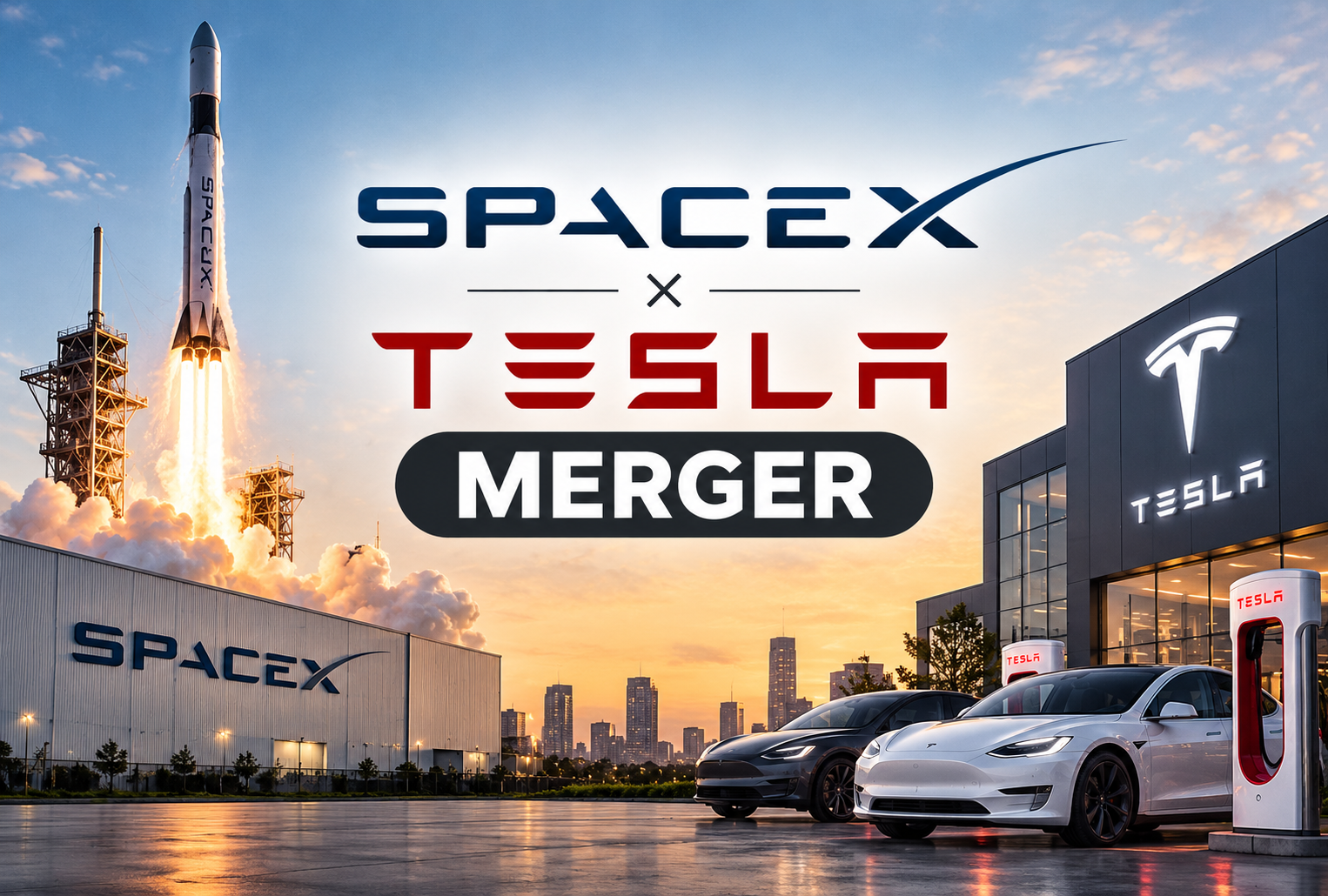
The possibility of combining SpaceX and Tesla has become an important business story as Elon Musk's companies expand their activities in artificial intelligence, robotics, energy, transportation, and computing infrastructure.
Both businesses have traditionally operated in different markets. Tesla is known for electric vehicles, battery storage, and autonomous-driving technology, while SpaceX focuses on rocket launches, satellite communications, and space transportation.
However, their growing technological connections have led investors and analysts to examine whether a merger could create new opportunities.
According to a Reuters report published on October 21, 2026, Musk sees potential benefits in combining the companies, but the transaction is not certain. Special committees and shareholder approval remain important considerations.
Original source: Reuters reporting on Tesla–SpaceX merger discussions
Why Are SpaceX and Tesla Merger Talks Attracting Attention?
The two companies are increasingly connected through technologies that could support their future business plans.
Tesla invests in artificial intelligence, autonomous systems, robotics, and advanced manufacturing. SpaceX is expanding its satellite internet operations and AI computing activities.
Combining their resources could potentially help coordinate research, engineering, infrastructure investment, and long-term technology development.
Nevertheless, strategic similarities do not automatically mean that a merger will happen. Any proposed transaction would need to make commercial sense and address the interests of shareholders and other stakeholders.
How Could a Merger Benefit Both Companies?
1. Shared Artificial Intelligence Research
Both businesses are investing in AI-related technologies. A combined corporate structure could make it easier to coordinate selected research projects, computing infrastructure, and engineering resources.
Such cooperation might help accelerate the development of autonomous systems and other advanced technologies, although the actual benefits would depend on execution.
2. More Opportunities for Robotics
Tesla's work on humanoid robots and autonomous vehicles could potentially complement technologies developed within the broader SpaceX ecosystem.
Shared engineering capabilities might create opportunities in automation, manufacturing, and robotics. However, these remain potential advantages rather than guaranteed outcomes.
3. Satellite Connectivity and Transportation
SpaceX's Starlink network provides satellite-based connectivity services, while Tesla develops connected vehicles and autonomous-driving systems.
Closer cooperation could create opportunities to explore new connectivity services and infrastructure. Any future products would still need to meet technical, regulatory, and commercial requirements.
4. Coordinated Investment
Space infrastructure and AI computing require substantial capital investment. A combined business might be able to coordinate certain spending decisions and allocate resources across related projects.
On the other hand, combining the companies could also create additional financial and operational complexity.
What Could Prevent the Merger?
Despite the potential advantages, a transaction would face several important challenges.
Shareholder Approval
Tesla shareholders would need to evaluate whether the proposed terms provide sufficient value. Investors may disagree about the appropriate valuation of each business and how the combined company should be managed.
Corporate Governance
Elon Musk has significant influence over both businesses, creating questions about conflicts of interest, independent decision-making, and the treatment of minority shareholders.
Independent review and transparent negotiations would be important for establishing confidence in the transaction.
Regulatory and National Security Concerns
SpaceX works with government and national-security customers, while Tesla has substantial international operations. A merger could attract regulatory scrutiny because the businesses operate across different markets and jurisdictions.
Different Business Risks
Tesla faces challenges related to vehicle demand, competition, manufacturing, and autonomous driving. SpaceX faces its own risks involving launches, satellite infrastructure, and expensive long-term projects.
Combining the businesses would not eliminate these risks. Instead, shareholders could become exposed to a wider range of opportunities and uncertainties.
What Should Investors Watch Next?
Investors should focus on verified company announcements rather than speculation on social media.
Important developments include formal merger proposals, disclosures in regulatory filings, shareholder voting arrangements, independent committee decisions, and details about the potential valuation of each company.
Quarterly financial results and spending on AI infrastructure may also help investors understand why the companies are exploring closer ties.
A proposed merger should not be treated as completed until the necessary agreements and approvals are confirmed.
Conclusion
The possibility of a SpaceX and Tesla merger illustrates how technology companies are increasingly connecting artificial intelligence, transportation, robotics, energy, and communications.
A combination could offer opportunities for coordinated investment and research, but significant financial, regulatory, and governance challenges remain.
For now, investors and business observers should distinguish between discussions about a possible transaction and a confirmed agreement. The next major development will depend on formal negotiations, shareholder considerations, and whether the proposed combination creates sufficient long-term value.